
Day 1
Calgary Arrival & Banff Town
Fly into Calgary International Airport (YYC), drive 90 minutes west through rolling foothills into Banff, and ride the Banff Gondola up Sulphur Mountain.
The surreal turquoise waters of Moraine Lake and Lake Louise, the historic castle of Fairmont Banff Springs, and the Columbia Icefield.
Iconic landmarks, architectural wonders, and scenic landscapes defining the character of Banff & The Canadian Rockies.
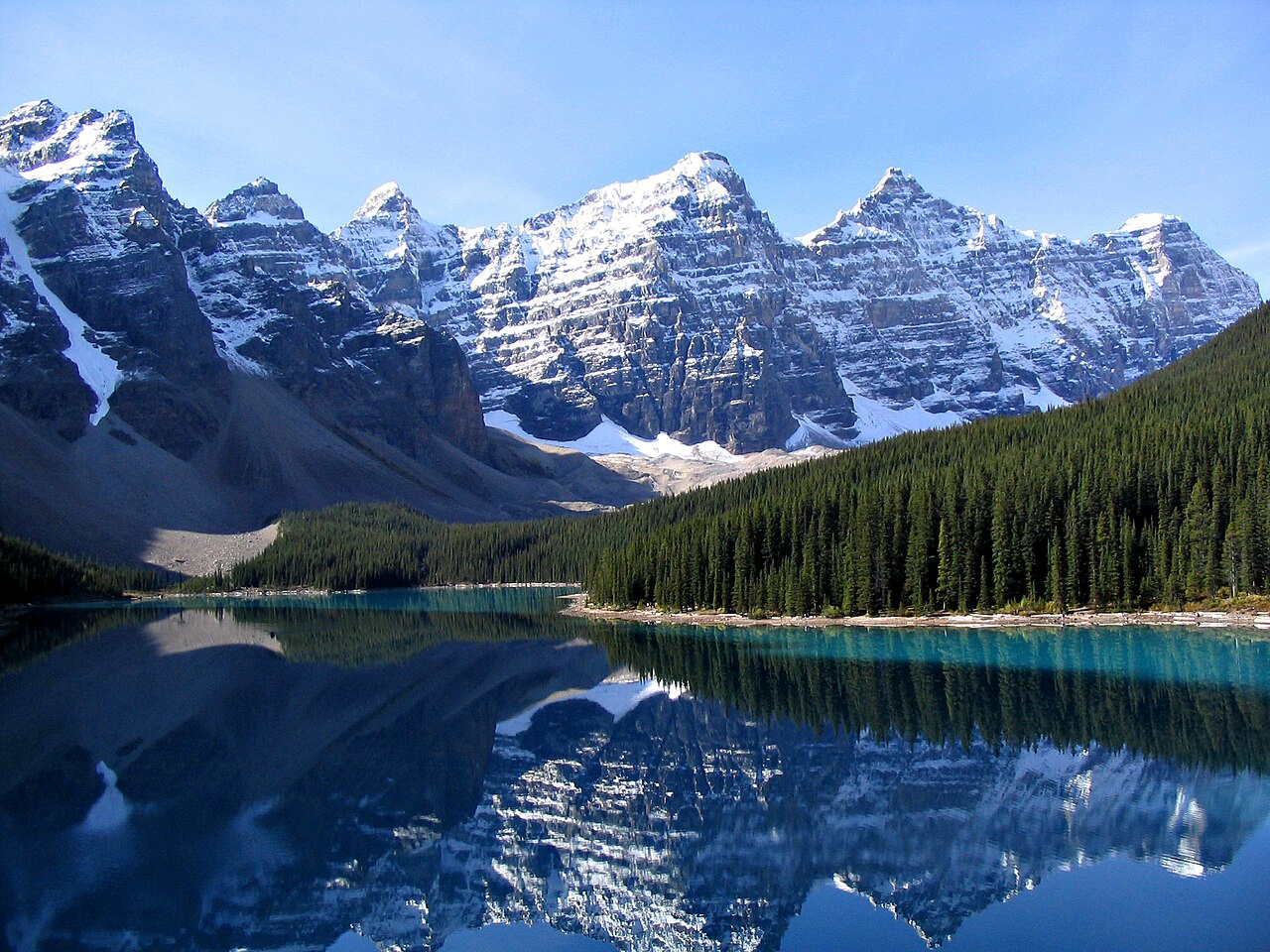
The world-famous glacially fed lake in the Valley of the Ten Peaks, renowned for its vivid shade of turquoise caused by rock flour refracting light.
The world-famous glacially fed lake in the Valley of the Ten Peaks, renowned for its vivid shade of turquoise caused by rock flour refracting light.
Established in 1885 as Canada's first national park, Banff National Park in Alberta is a breathtaking wilderness sanctuary tucked into the heart of the Canadian Rocky Mountains. Known for soaring limestone peaks, dense evergreen valleys, and glacial lakes of impossible neon turquoise, Banff is a UNESCO World Heritage treasure.
From the iconic Valley of the Ten Peaks framing Moraine Lake to the regal Chateau overlooking Lake Louise and the historic Scottish baronial castle of Fairmont Banff Springs, the park provides an unmatched combination of pristine alpine nature, world-class hiking trails, and abundant wildlife including grizzly bears, elk, and bighorn sheep.
Discover the celebrated cultural landmarks, panoramic viewpoints, and architectural treasures that define Banff & The Canadian Rockies.
Climb the short Rockpile trail for the famous "Twenty Dollar View" overlooking the incandescent turquoise lake framed by ten snow-clad peaks.
A thoughtfully paced day-by-day exploration sequence designed to experience the best of Banff & The Canadian Rockies without unnecessary transit rush.
Fly into Calgary International Airport (YYC), drive 90 minutes west through rolling foothills into Banff, and ride the Banff Gondola up Sulphur Mountain.
Spend the morning paddling a canoe across Lake Louise, hike up to Lake Agnes Tea House, and take in sunset over the Victoria Glacier.
Take the Parks Canada shuttle to Moraine Lake at dawn to watch sunrise illuminate the Ten Peaks, followed by an afternoon hike in Larch Valley.
Drive the spectacular Icefields Parkway north, view wolf-shaped Peyto Lake, and board an all-terrain Ice Explorer onto the Athabasca Glacier.
Walk through Johnston Canyon along suspended metal catwalks to view the Lower and Upper waterfalls before returning to Calgary.
* This is an illustrative suggested route. Pacing, day allocations, and points of interest can be customized based on your preferences.
Key travel considerations covering entry visas, seasonal weather, recommended duration, local transit, and etiquette.
Citizens of visa-exempt countries (such as the UK, EU member states, Australia, Japan, etc.) flying to Canada must obtain an Electronic Travel Authorization (eTA) online before departure. US citizens only require a valid US passport. Citizens of other countries must apply for a standard Canadian visitor visa.
Due to extreme parking congestion, Moraine Lake Road is completely closed to personal private vehicles. Visitors must book a seat in advance on the official Parks Canada Shuttle (departing from Lake Louise Ski Resort) or use commercial shuttle buses, regional Roam Transit, or guided tours.
The lakes thaw in late May or early June, but their signature intense turquoise-blue color peaks from late June through August, when glacial meltwater carries high concentrations of fine glacial silt ("rock flour") that refracts sunlight.
Banff is home to both black bears and grizzly bears. While encounters are rare on busy trails, visitors should always carry bear spray in an easily accessible holster (not inside a backpack), hike in groups, make noise on trails, and keep food securely stored in bear-proof bins.
Winter (December to March) is magical for skiing at "The Big 3" resorts (Banff Sunshine, Lake Louise, and Mt. Norquay) with powdery snow. Temperatures typically range from -5°C to -15°C (23°F to 5°F) and can occasionally drop to -25°C. Heavy winter parkas, thermal base layers, and insulated boots are mandatory.